My Role
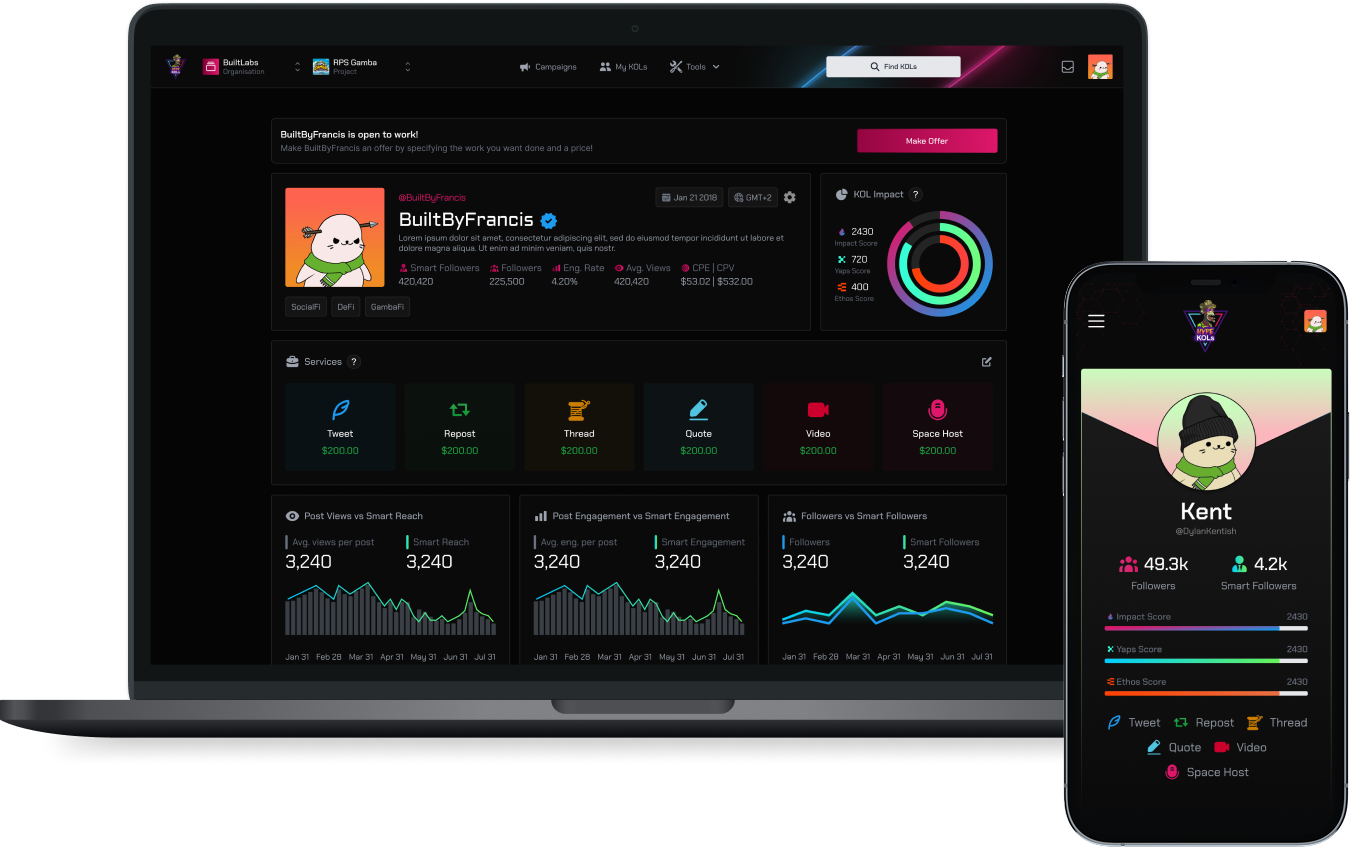
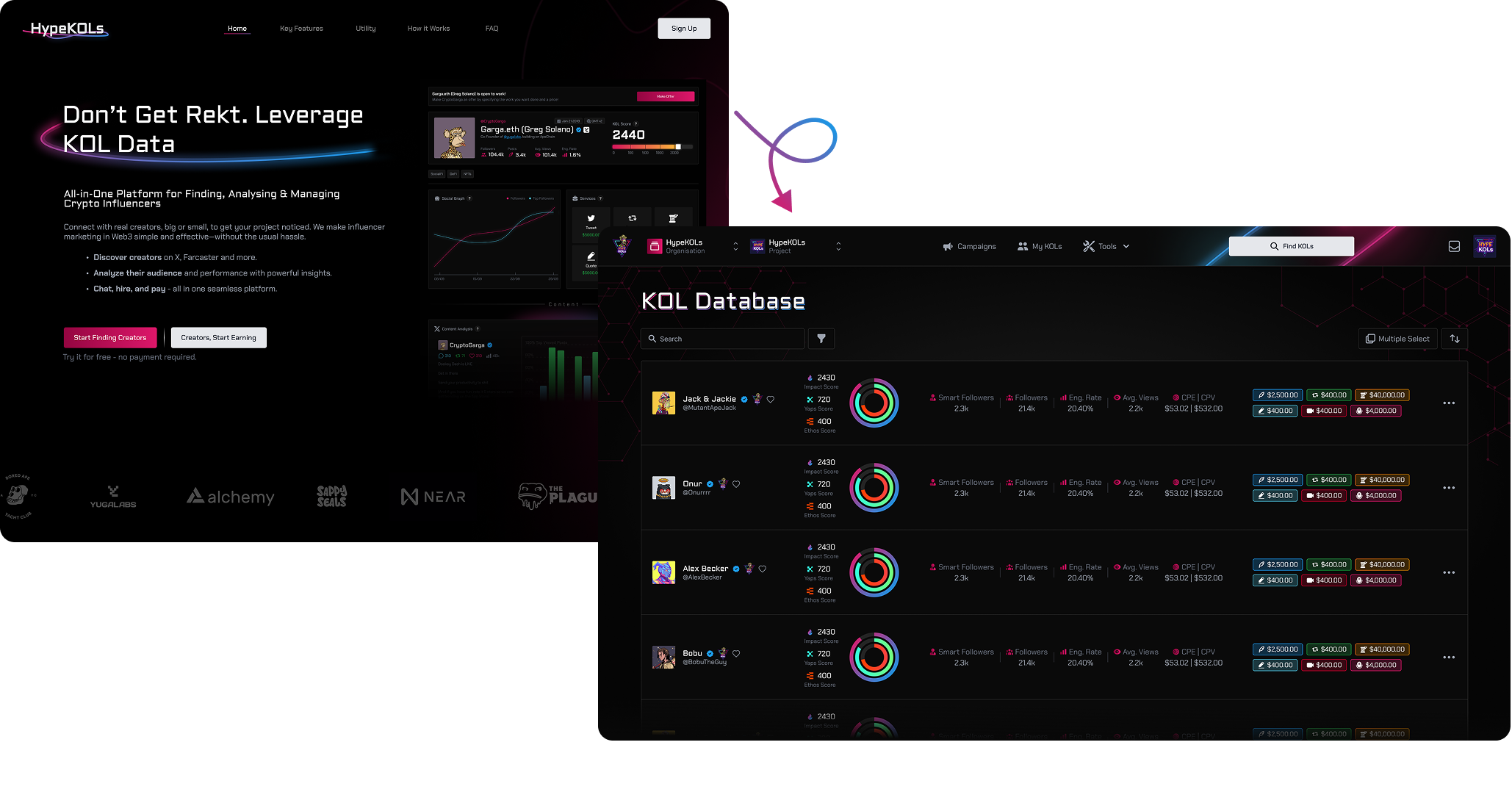
I owned the product design end to end, from early discovery through to final handoff. That meant running stakeholder workshops to map the core jobs to be done on both sides of the marketplace, building out the information architecture, designing the KOL profile system, and creating the campaign dashboard that brands actually use to manage spend and track performance.
I also led the design of the filtering and discovery system, the part of the product that makes or breaks the brand experience. Getting the data model right before touching Figma was the call that saved weeks of rework.
The Challenge
Brands had no way to verify a KOL's real reach. KOLs had no protection against brands who ghosted after the post went live. And the whole ecosystem ran on DMs, spreadsheets, and crossed fingers.
The brief was to design a marketplace that solved both sides at once — giving brands the data to make informed decisions and giving KOLs a workflow that protected their time and their payment.
Brands couldn't verify engagement quality. KOLs couldn't guarantee payment. No shared workflow existed. Every campaign started from zero and depended entirely on personal relationships to hold together.
Process
Interviewed brands and KOLs across three markets. Mapped how collabs actually happened, not how people said they happened.
Mapped requirements for both sides, focusing on transparency, secure payments, and advanced filtering as the three non-negotiables.
Designed and prototyped responsive flows — KOL profiles, filtering tools, and campaign dashboards — tested with real users at each stage.
Shipped a design system alongside the product. Components built for a team that would keep iterating without me in the room.
Who we designed for


What we built
Verified KOL pages with real analytics: engagement rate, niche breakdown, past campaigns.
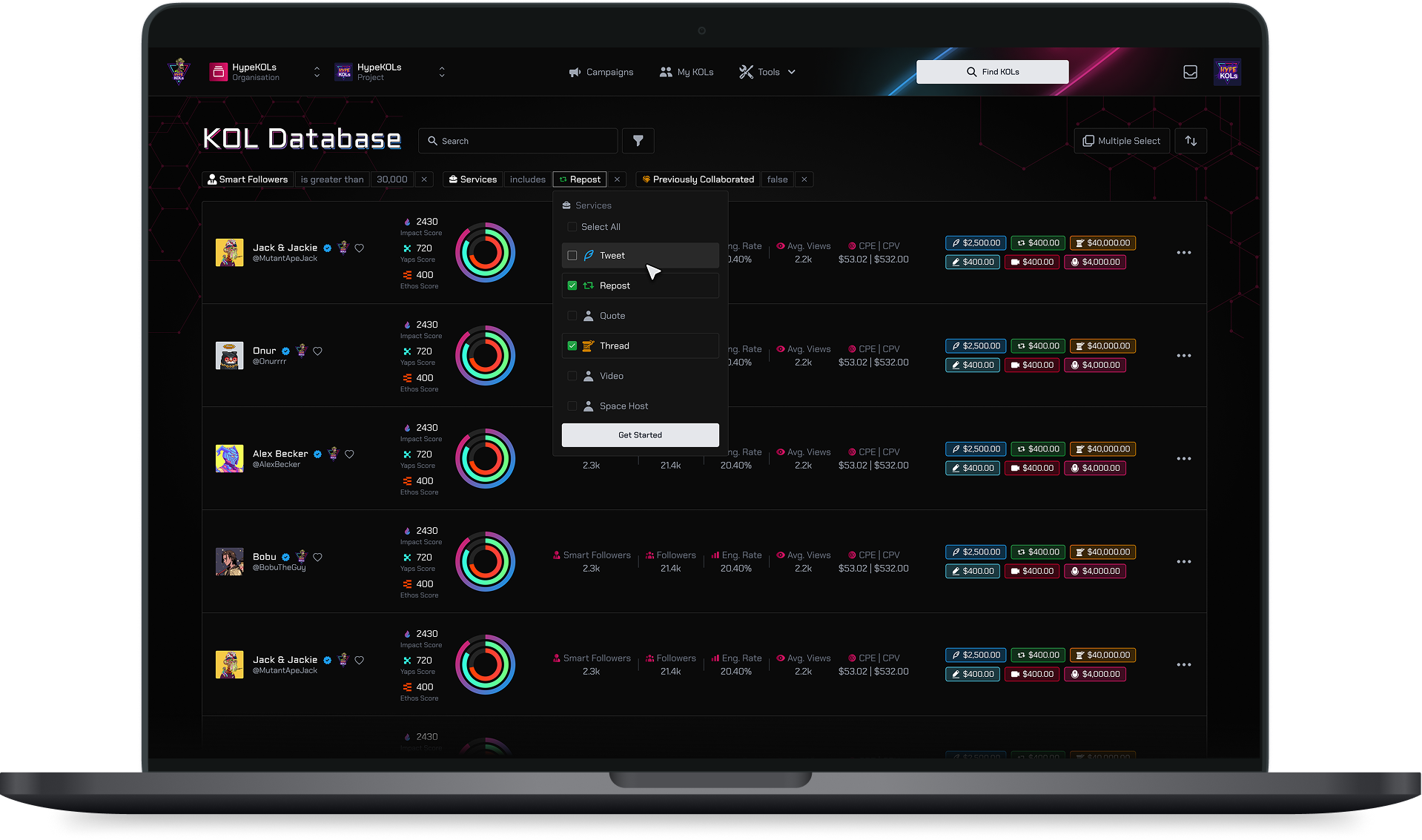
Searchable KOL directory with live data pulled from Twitter. Always current, never stale.
Advanced filters by niche, follower range, engagement, price, past performance and more.
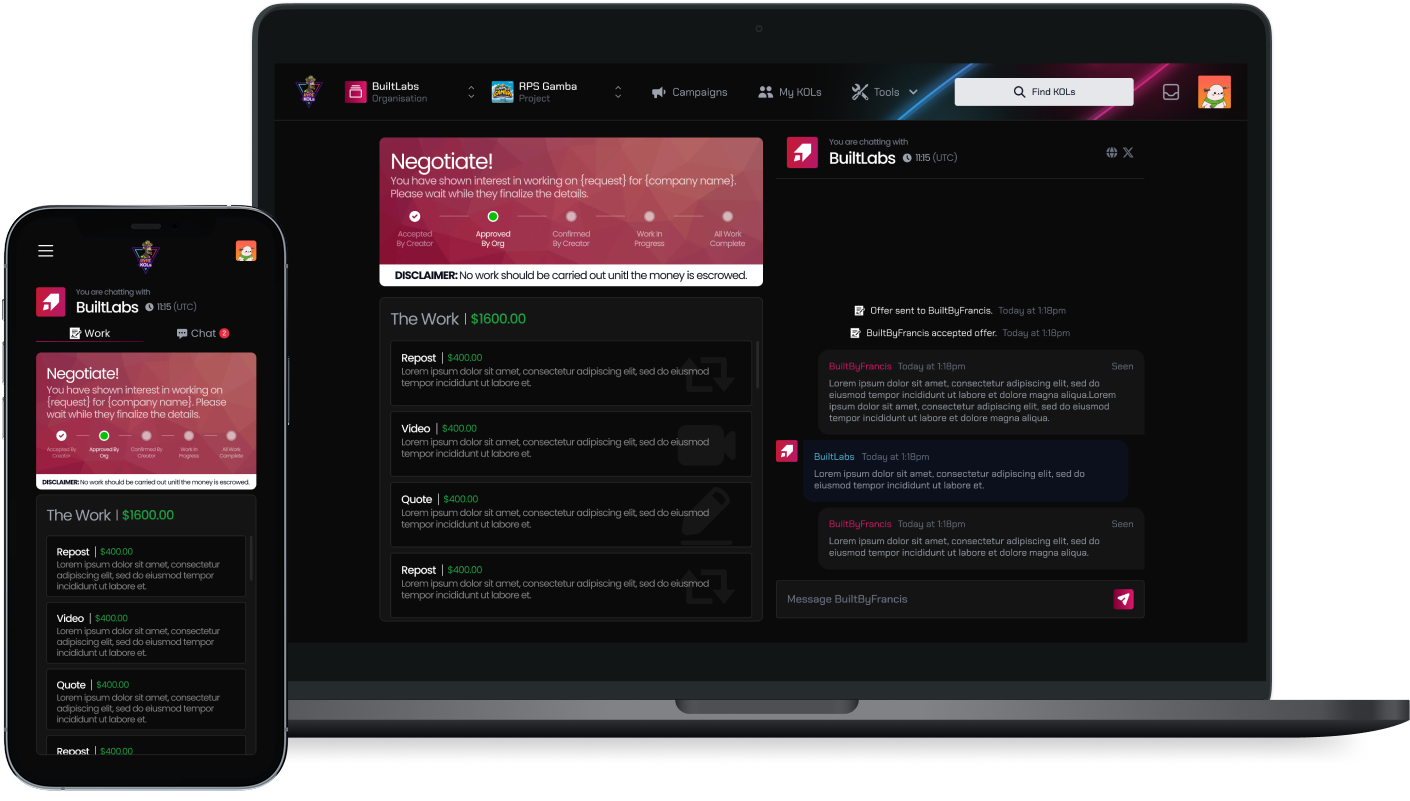
End-to-end campaign workspace: brief, approval, publish, track. One screen, no spreadsheets.
USDC held in escrow until deliverables are confirmed. Payment protected on both sides.
Design deep dive
Brands can't trust a KOL they can't evaluate. So I designed the filtering layer to be the primary entry point — not a sidebar afterthought.
The system lets brands slice the KOL database by niche, geography, engagement quality, follower band, pricing tier, and past campaign history — all live. Results update without a page reload.
Trust mechanism
The escrow workflow was the hardest design problem on the project. The UX had to work for brands who were new to crypto and KOLs who were already comfortable with wallets — same flow, different mental models.
The solution: abstract the crypto layer completely for brands, surface the USDC confirmation step only for KOLs who need it. The brand sees a payment confirmation. The KOL sees wallet details. Both see the same escrow status.
Funds are held on-chain from campaign start. Released automatically when the KOL submits post proof and the brand confirms delivery. Disputes trigger a review process, not a payment block.
Platform coverage
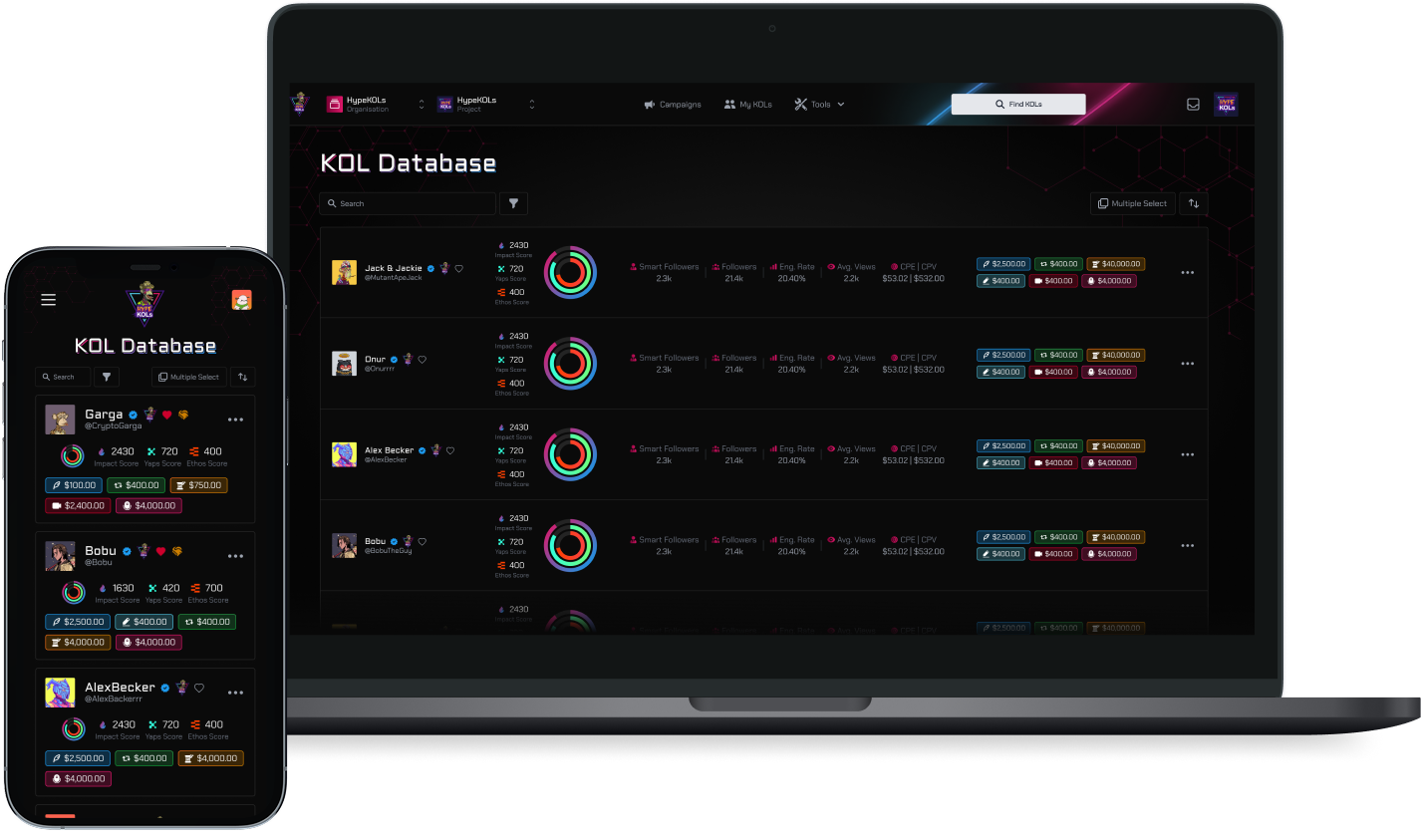
Research showed brands manage campaigns from desktops — spreadsheets open next to dashboards. KOLs check status on their phones between posts. The layouts are separate but the data is shared.
Outcomes
What I learned
Every interaction either builds or erodes trust. The escrow confirmation screen, the KOL verification badge, the engagement rate source label. None of it decorative. All of it doing work. Designing for transparency meant treating every data point as a trust signal.
Jasmine thinks in campaigns and budgets. Alex thinks in deliverables and timelines. Same product, completely different frames. The filters, dashboard, and escrow flows had to speak both languages without a translation layer in the middle.
The USDC escrow is technically sophisticated. The UI shouldn't be. Abstracting blockchain complexity for brands while keeping it visible for KOLs was the hardest call, and the one that made the most difference in testing.
I underestimated how central the discovery layer would become. By the time we finished testing, brands were spending 60% of their active sessions in the filter and database views. It's not a feature. It's the core loop.
Conclusion
HypeKOLs works because it doesn't ask either side to trust the other. It gives them verified data instead. Brands see real engagement numbers before they spend a dollar. KOLs see payment locked in escrow before they write a word.
The design job was to make all of that feel simple. A verified database, a filtering system that actually filters, campaign workflows that don't require a project manager, and payments that clear without a spreadsheet to track them.
Web3 influencer marketing was always going to grow. What it needed was a product worth growing into.